I CARE


Synopsis
Men perform everyday household tasks making visible what is otherwise taken for granted, and therefore invisible, when performed by women. These “house-husbands” are simultaneously staged as sex objects — a parodistic reversal of the “male gaze” (Laura Mulvey).
MENTAL LOAD — Invisible Labour
Specs
Genre: Video art
Production: AUT 2026
Running Time: 3:45 min
Language: n.a.
Shooting Format: RAW
Aspect Ratio: 16:9
Sound Mix: Stereo 2.0
Concept and Realization
Robert Cambrinus
Cast
Robert Kraner
Peter Marchart
Markus Schaarschmidt
Konstantin Dellbrügge
Robert Nibbelink
Robert Cambrinus
Music
Title — The Blue Danube
Composer — Johann Strauss II
Arranger — Julian Gallant
Arranger — Jeff Meegan
Arranger — David Tobin
Publisher — Audio Network Rights
Exhibitions
Personal Structures - Confluences — La Biennale di Venezia/ECC, Palazzo Mora (Italy)
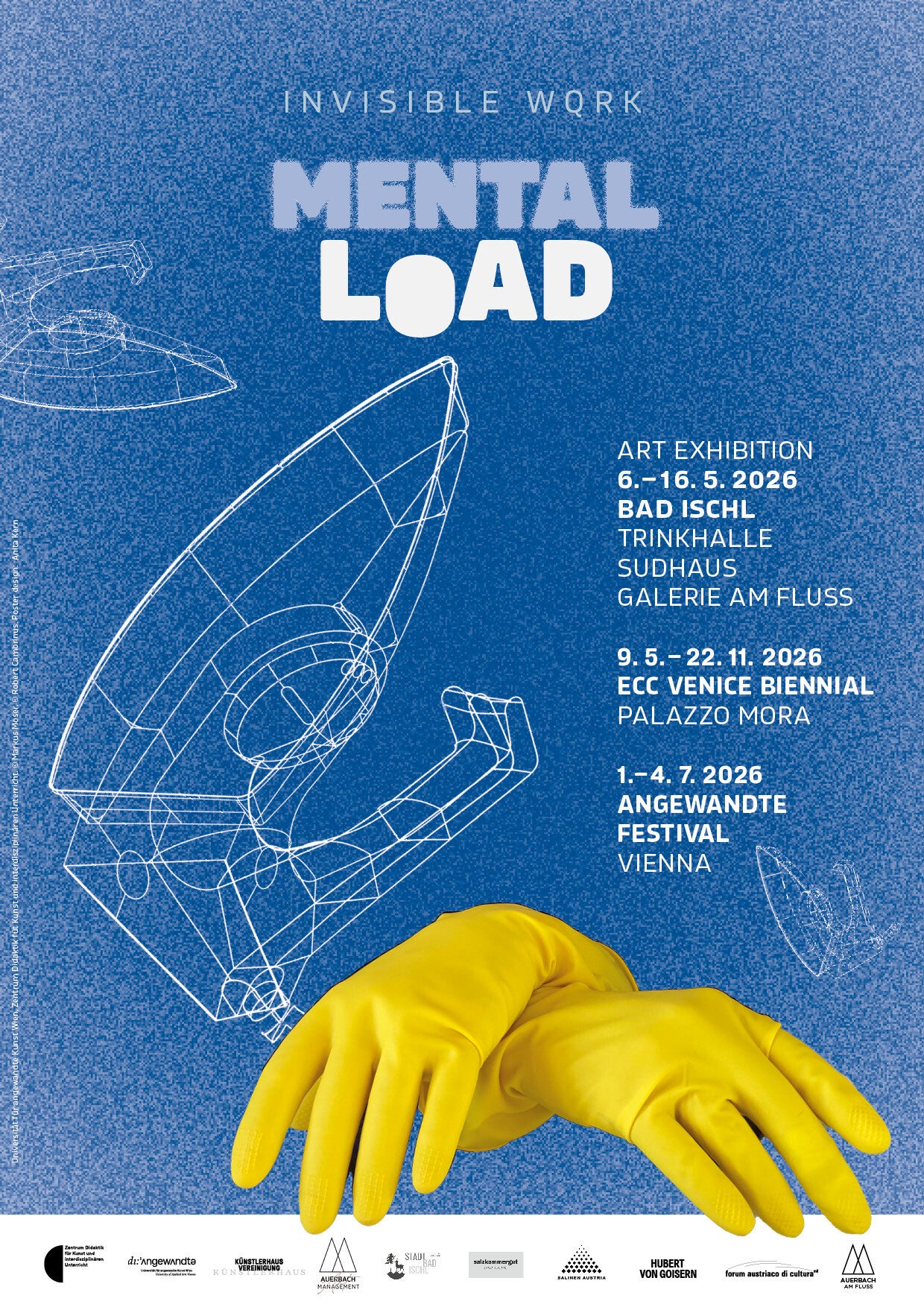
Mental Load and Invisible Labour — Trinkhalle/Sudhaus Bad Ischl (Austria)
Mental Load und unsichtbare Arbeit — VHS Donaustadt Wien (Austria)
Notes
I CARE addresses the invisible, unpaid care and housework by revealing its gendered coding through a performative role reversal. Men perform everyday household tasks — mopping floors, cleaning windows, tidying bathrooms, or making beds — activities that are still often marked as "feminine" in the social consciousness. The irritation does not lie in the act itself, but in the shift in attribution: only the man in this role makes visible what is otherwise taken for granted, and therefore invisible.
The video uses cinematic techniques, such as the repetition of everyday gestures and a quasi-documentary visual language, to mark routines as political terrain. These scenes are interrupted by short, stylized inserts of classic pin-up iconography. In these, the men pose in positions that traditionally portray women as desirable objects. This refraction creates a double shift: The “perfect house-husband” is simultaneously staged as a sex object — a parodistic reversal of the “male gaze” (Laura Mulvey) that exposes its mechanisms.
The irony here functions not merely as a punchline, but as a strategic method of making things visible. The film explores questions of the body, labour, and the gendered gaze, and shows how deeply hegemonic gender roles are inscribed in everyday practices as well as in visual cultural techniques.